Table of Contents
This is the first chapter in the Keyword Module of the SEO Fundamentals series.
There are four chapters in total:
- What keywords are
- What search intent means
- How to find keyword ideas
- How to check ranking difficulty
For now, we’re focusing only on Chapter 1 — understanding what keywords really are and how to choose them using a clear four-point checklist.
When I first started learning SEO, my goal was simple: I wanted my website to reach more people. I had a vague sense that SEO mattered, but I didn’t understand what actually made a page rank. Everyone kept talking about “keywords” and “search intent,” but few explained them in plain language.
After taking courses, reading countless guides, and running experiments on my own site, I learned that keyword research is the foundation of everything. It’s what tells Google who you are, what your website is about, and who should see it.
If your website were an eye, keywords would be the light that enters it. They help Google focus your site so that the right people see you clearly. Without them, everything stays blurry — no matter how beautiful your design is or how good your services are.
What Keywords Really Are
Keywords are simply the words and phrases that people type into Google when they’re looking for something.
If someone searches “best cataract surgeon in Atlanta,” that’s a keyword. So is “LASIK recovery time,” “dry eye clinic near me,” or “light adjustable lens review.”
Each keyword represents intent — a snapshot of what someone wants. Some search to learn, others to compare, and some to take action. Your goal is to use the same language your audience uses so that Google can connect your content with the people who need it most.
Why Keyword Research Matters
Keyword research is the process of discovering what people are searching for, analyzing which topics attract traffic, and deciding which ones are worth creating content around.
It’s the SEO version of a comprehensive eye exam. Before prescribing treatment, you need measurements — vision, pupils, pressuresl. Keyword research gives you those measurements for your website. It shows you what the audience sees, what matters to them, and where your opportunities are.
To choose keywords that truly work, we’ll use a four-point checklist:
- Search demand
- Traffic potential
- Business potential
- Ranking feasibility
Each one gives a different angle on whether a keyword is worth your time.
Step 1: Search Demand
Search demand tells you how many people search for a phrase each month. This number is called search volume.
If “LASIK near me” gets 10,000 monthly searches, that’s 10,000 potential visitors. But high search volume often means high competition, and not every search leads to a click — Google sometimes answers questions directly in the results.
The goal isn’t to chase the biggest number; it’s to find the right balance between interest and achievability.
Free tools you can use:
- Google Keyword Planner – Free inside Google Ads.
- Go to ads.google.com, create a free account, skip the campaign setup, open Tools & Settings → Keyword Planner → Discover new keywords.
- Enter topics such as LASIK, dry eye, or cataract surgery, choose your region, and click Get results.
- You’ll see columns for monthly searches, competition level, and cost per click.
- Ubersuggest – Free plan available at ubersuggest.com.
- Type your keyword, choose your country, and review search volume, competition, and related ideas.
Think of search demand like visual acuity: it measures clarity. You need it, but it’s only one part of the full picture.
Step 2: Traffic Potential of Keywords
Traffic potential estimates the total visits you could receive if you rank well — not just from one phrase but from every related search your page appears for.
For instance, a single article about light adjustable lens results might also rank for LAL outcomes, best cataract lens 2025, and PanOptix vs LAL. A single strong page can collect hundreds of these variations.
In many cases, traffic potential gives a clearer picture than search volume alone. The top-ranking page might draw triple the visits suggested by a single keyword because of all the overlapping searches it captures.
Check it with:
- Ubersuggest’s “Content Ideas” tab.
After searching your keyword, click Content Ideas to see the pages that rank for it and how much traffic each page receives. If you find a page with high traffic but only a few backlinks, that’s a sign of opportunity.
Traffic potential is like looking through a wide-angle lens instead of a slit lamp — you see the entire landscape, not just a single focal point.
Step 3: Business Potential of Certain Keywords
Even strong traffic numbers don’t always translate into meaningful results. Business potential measures how valuable a keyword is to your actual goals.
Some searches bring ready-to-act visitors. Others attract readers who are just browsing. It’s the difference between a patient researching cataract symptoms and one actively booking surgery.
I grade keywords on a simple 1-to-3 scale:
- 3 – Directly tied to your services.
LASIK Atlanta or cataract surgery near me clearly align with what you offer. - 2 – Educational but related.
How to prepare for cataract surgery builds trust and positions you as an expert. - 1 – Low connection.
How the eye focuses light attracts curiosity but few new patients.
Focus on the 2s and 3s. These bring qualified visitors who may convert. A quick spreadsheet or Notion table works fine — just keep a column for “Business Potential.”
Step 4: Can You Realistically Rank for Those Keywords?
Finally, you have to ask whether you can rank for the keyword anytime soon.
In Ubersuggest, look at the SEO Difficulty score. Anything under 35 is generally achievable for new or local websites. Over 50 means stronger national competition.
You can also check manually:
Search your keyword in Google and examine the first page. If it’s filled with giants like WebMD or Mayo Clinic, move on for now. If you see local clinics or smaller blogs, that’s a green light.
As your site earns backlinks and authority, you’ll gradually tackle tougher keywords — just as a surgeon builds complexity over time. Start with what you can execute confidently, then expand.
Putting the Checklist Together
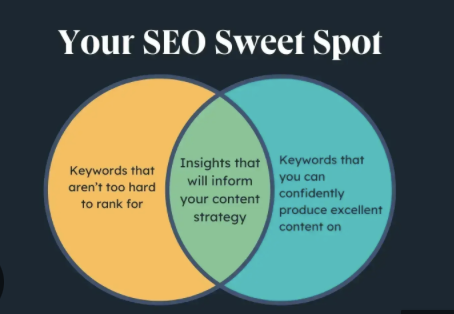
Choosing the right keyword is about balance:
- Enough search demand to matter.
- Enough traffic potential to grow.
- Enough business value to justify the work.
- And realistic difficulty so you can actually win.
When you find that balance, you’re not guessing — you’re making evidence-based SEO decisions, the same way you’d make evidence-based medical ones.
Use Google Search Console to see which searches already bring people to your site and Google Analytics 4 to track what they do once they arrive. Both are free, and together they let you measure improvement month after month.
Final Thoughts
Keyword research isn’t about chasing algorithms; it’s about understanding people. Every search is a question, every keyword a symptom. When you learn to listen to those signals, you can respond with clarity, empathy, and precision.
This is the first step in mastering SEO — learning to see what your audience sees.
In the next chapter, we’ll dive deeper into search intent and learn how to interpret the “why” behind every query so your content matches what people truly want.