When most physicians finish training, they know how to read an OCT, perform a cataract surgery, or manage glaucoma. What they often don’t know is how to read one of the most important documents in practice ownership: the Profit and Loss statement. This is referred to often and a profit & loss or a P&L sheet.
The truth is simple. If you want to run a thriving ophthalmology practice, understanding your P&L is just as important as understanding your patients’ charts.
The Profit and Loss (P&L) as a Health Checkup
Think of a P&L like a clinical workup. It’s a health checkup for your business.
Just as you wouldn’t diagnose a patient without gathering data, you can’t diagnose the financial health of a practice without looking at a P&L. It tells you:
- How much money came in (revenue)
- How much money went out (expenses)
- What’s left over (profit)
But here’s the key: organization matters. A disorganized P&L is like a messy EMR. The information might be there, but good luck using it to make decisions. A well-organized P&L, on the other hand, is structured, clear, and actionable.
Why Categories Matter
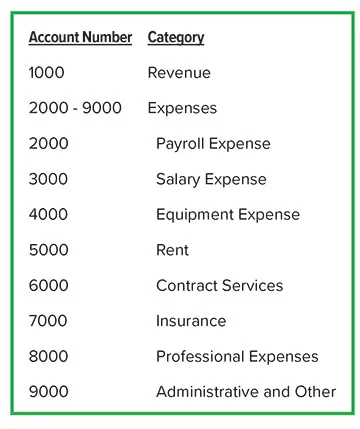
The power of a P&L lies in its categories. When revenue and expenses are separated into meaningful groups, you can see the story of your practice unfold.
For ophthalmology, that means distinguishing:
- Revenue sources like clinic visits, diagnostic testing, surgeries, and optical sales.
- Expenses like payroll, supplies, rent, insurance, technology, and marketing.
Why does this matter? Because categories make trends visible. If surgical revenue is growing but surgical supply costs are rising faster, you’ll see it. If payroll is consuming too much of your income, it stands out. Categories make it possible to identify strengths and weaknesses quickly.
Without categories, your P&L is just noise. With them, it becomes a roadmap.
Common Pitfalls in P&L Statements
Many physicians never learned how to read a P&L, and as a result, their statements are often more confusing than helpful. The most common pitfalls are show next. But no cap, I paid an accountant and consultant and they made that first mistake. Fortunately, I was talking to a dentist colleague of mind. He laughed at my disorganized P&L sheet and referred me to this accountant. She shredded my original P and L and rebuilt it. Slay.
All gen-z related jokes aside, here are some common pitfalls.
- Lumping expenses together
Without separating payroll, supplies, and rent, you can’t see what’s driving costs. - Mixing personal with business expenses
Running unrelated costs through the practice makes it nearly impossible to get a true picture of profitability. - Ignoring percentages
A $10,000 expense looks very different in a practice that makes $100,000 per month versus one that makes $500,000. Percentages of revenue provide the context you need. - Looking too infrequently
A P&L isn’t something to check once a year. Monthly reviews help you make course corrections before problems grow.
The Big Picture: Why Organization Drives Strategy
So why is a well-organized P&L so important? Because it doesn’t just show where you’ve been, it helps guide where you’re going.
- Growth Decisions
Thinking about adding a second location or expanding surgical services? A clean P&L shows whether your margins can support the move. - Staffing Strategy
Debating whether to hire another technician, scribe, or front desk staff? Payroll percentages will give you the answer. - Technology Investment
Wondering if you can afford a new OCT, laser, or EMR platform? Your P&L will tell you whether the practice can absorb the cost. - Exit Planning
Whether you’re planning to sell, bring on a partner, or just value your practice, buyers and bankers alike will want to see clean financials. EBITDA — a profitability measure built directly from your P&L — is the number they care about most.
A Simple Profit and Loss (P&L) P&L Checklist for Practice Owners
If you’re a physician-owner, ask yourself:
- Are my revenue streams separated (clinic, surgery, optical)?
- Are expenses grouped logically (payroll, supplies, facility, insurance, marketing)?
- Do I see percentages of income, not just raw numbers?
- Can I quickly identify the biggest cost drivers?
- Does this document give me confidence in making growth or staffing decisions?
If the answer to any of these is no, it may be time to revisit how your P&L is structured. It’s okay. We all make mistakes. I did too, and I had to rebuild and reorganize my P&L sheet from scratch.
Why Every Good Business Owner and Consultant Cares
At the end of the day, the P&L is not just an accounting tool — it’s the foundation of strategy. Every successful business owner and consultant pays close attention to it because it provides answers that no other document can.
- It shows whether the business is efficient.
- It reveals where money is being wasted.
- It highlights opportunities for growth.
- It simplifies conversations with lenders, investors, or partners.
In medicine, we pride ourselves on data-driven care. Your P&L is the data that drives your business decisions. Ignoring it means running blind.
Key Takeaways
- A P&L is the financial health checkup of your practice.
- Organization is everything: clear categories turn raw numbers into a roadmap.
- Avoid common mistakes like lumping expenses or ignoring percentages.
- Review your P&L regularly, not just once a year.
- A well-structured P&L is the foundation for practice growth, staffing, investment, and long-term strategy.
Looking Ahead
This blog is just the beginning. In future posts, we’ll dive into which metrics you should target — like payroll ratios, overhead benchmarks, and profit margins — to know whether your practice is truly healthy. At the end of the day, it’s good that your practice is up and running. It’s actually NOT hard to start a practice. It’s hard to let it boom and grow.
And if you want to go deeper, our upcoming podcast will expand on these ideas with real stories, real numbers, and real strategies from physicians and business experts. Think of the blog as your quick-reference guide, and the podcast as the long-form conversation.